
Introduction
The phrase tcs employee salary drop has gained attention as many professionals try to understand why compensation sometimes decreases or grows more slowly than expected. Salary changes can happen for a variety of reasons, including shifts in company performance, market conditions, project availability, performance reviews, and changes in business priorities. While such discussions often create concern among employees and job seekers, it is important to look at the bigger picture rather than relying on speculation. Understanding how salary structures work can help professionals make informed career decisions instead of reacting to rumors.

Understanding Salary Changes in Large IT Companies
Large technology companies operate in a highly competitive environment where salaries are influenced by multiple factors. Employee compensation is not determined by a single policy but by a combination of business performance, client demand, individual contribution, and market trends.
Organizations regularly review compensation to stay competitive while maintaining financial stability. During periods of slower business growth, salary increases may be smaller than expected. In stronger market conditions, companies may reward employees with better increments, bonuses, or promotions.
This is why salary growth can vary from one review cycle to another, even within the same organization.
Why Employees May Experience Salary Drops
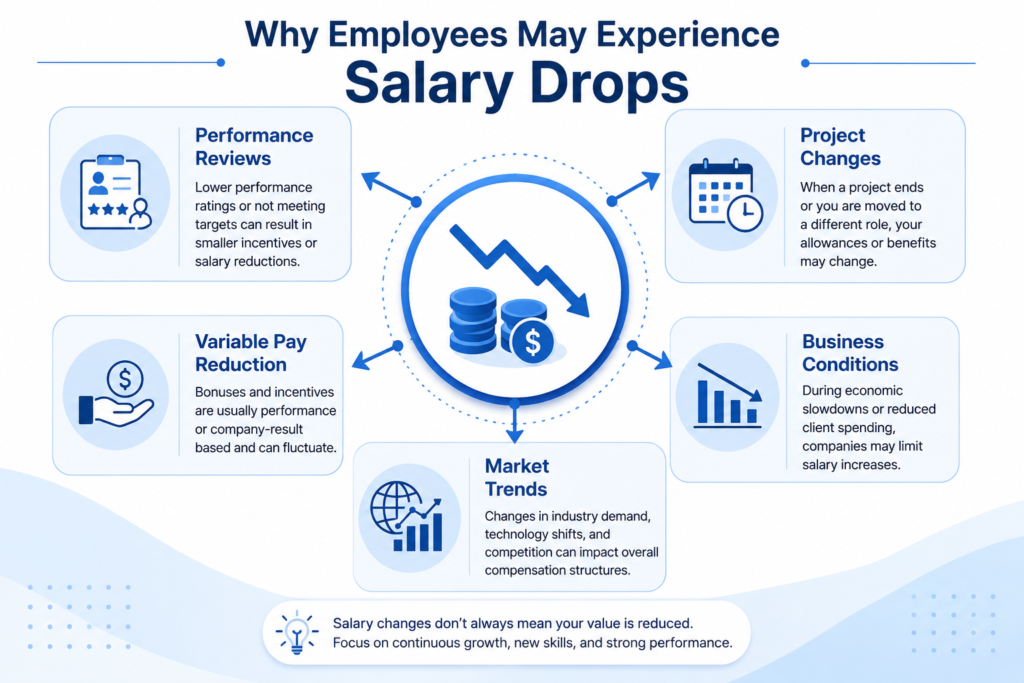
A salary drop does not always mean an employee’s base pay has been reduced. In many situations, the overall earnings decrease because of changes in variable pay, incentives, overtime compensation, or project-related benefits.
Some common reasons include:
Changes in Variable Pay
Many companies include performance-based incentives in total compensation. If company goals or individual targets are not achieved, these variable payments may decrease.
Project Availability
Employees working on specialized client projects may receive additional benefits or allowances. When a project ends or an employee moves to a different assignment, total monthly earnings may change.
Performance Reviews
Annual performance evaluations influence salary revisions. Strong performers generally receive higher increments, while average or below-average ratings may result in smaller increases.
Business Conditions
Economic uncertainty, changing client budgets, and industry-wide slowdowns can affect compensation planning across the technology sector.
How Market Conditions Affect Salaries
The IT industry is closely connected to global economic trends. When businesses reduce technology spending, software companies may experience slower revenue growth. In response, organizations often become more cautious with hiring, promotions, and salary revisions.
On the other hand, when demand for digital transformation, cloud computing, cybersecurity, and artificial intelligence increases, companies usually compete more aggressively for skilled professionals by offering better compensation packages.
As a result, salary trends are often influenced by market demand rather than a single company’s internal decisions.
Skills That Help Employees Increase Their Earning Potential
Instead of focusing only on salary discussions, professionals should invest in skills that improve long-term career growth.
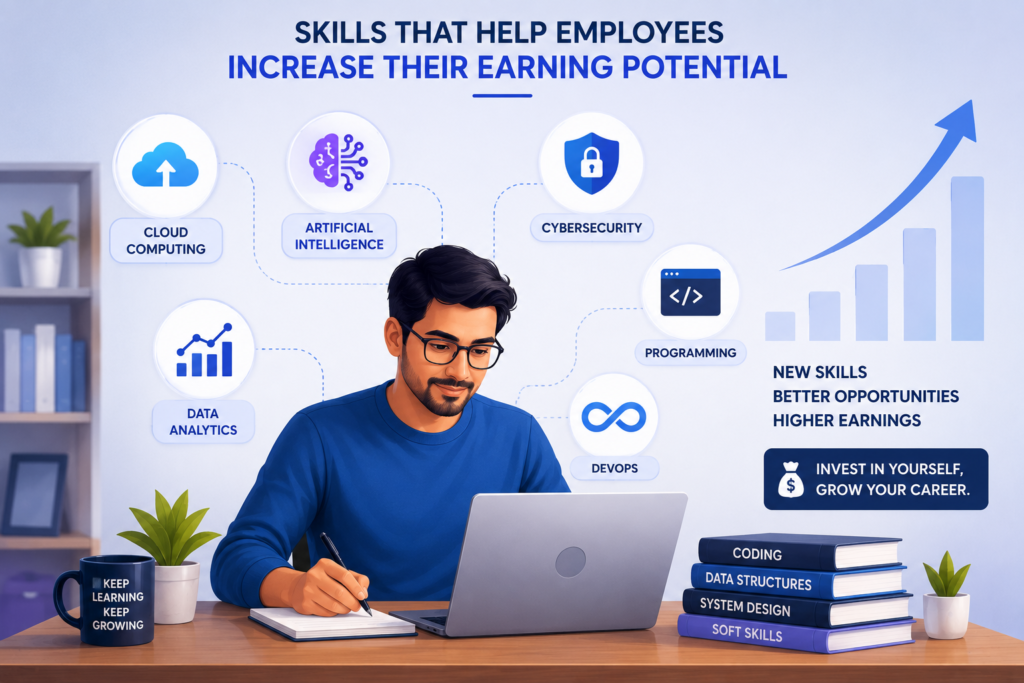
Some of the most valuable technical skills include:
- Cloud computing
- Artificial intelligence and machine learning
- Cybersecurity
- Data analytics
- DevOps
- Full-stack development
- Automation testing
In addition to technical expertise, employers also value communication skills, leadership, problem-solving abilities, and project management experience.
Employees who continuously learn and adapt to industry changes often enjoy stronger career progression and better salary opportunities.
How Employees Can Respond to Salary Concerns
If someone believes their compensation no longer reflects their skills or responsibilities, the best approach is to evaluate the situation professionally.
Helpful steps include:
- Review recent performance feedback.
- Compare responsibilities with current compensation.
- Improve technical certifications and professional skills.
- Discuss career growth during performance reviews.
- Explore internal opportunities before considering external options.
Taking a proactive approach often leads to better long-term career outcomes than making decisions based solely on short-term salary fluctuations.
Common Misconceptions About Salary Drops
Discussions about salary reductions often spread quickly on social media, but not every claim reflects the full picture.
One common misconception is that every employee experiences identical compensation changes. In reality, salaries differ based on role, experience, location, business unit, project assignments, and individual performance.
Another misunderstanding is that temporary business challenges permanently affect employee growth. Many technology companies adjust compensation strategies as market conditions improve.
Understanding these differences helps professionals avoid making career decisions based on incomplete information.
Looking Beyond Salary
While compensation is an important part of any job, it should not be the only factor when evaluating a career opportunity.
Employees should also consider:
- Learning opportunities
- Career progression
- Job stability
- Work-life balance
- Company culture
- Exposure to new technologies
- Leadership support
A role that offers valuable experience and continuous learning may create better long-term financial growth than a position with a slightly higher starting salary.
Conclusion
Discussions surrounding tcs employee salary drop often generate significant interest, but salary trends are influenced by many interconnected factors rather than a single reason. Market conditions, company performance, project assignments, employee skills, and individual performance all play important roles in determining compensation. Professionals who focus on continuous learning, strong performance, and career development are generally better positioned to achieve steady salary growth over time. Rather than reacting to temporary changes, building valuable skills and maintaining a long-term career perspective remains the most reliable path toward professional success.