
Introduction
The software ralbel28.2.5 issue has become a topic of interest for users who encounter unexpected software behavior after installation, updates, or regular use. Whether the problem involves performance, compatibility, installation errors, or system stability, understanding the possible causes is the first step toward finding a practical solution. Instead of assuming the issue has a single cause, users should evaluate their system configuration, software environment, and recent changes to identify the source of the problem.
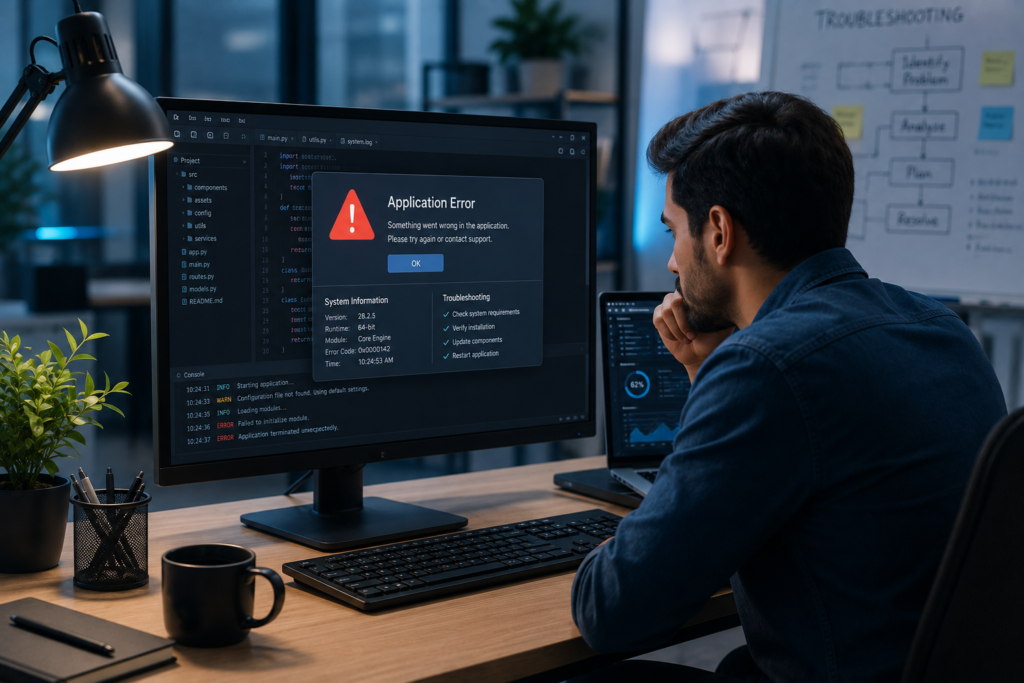
Understanding the Software Issue
Software problems can appear for many reasons, even when an application has been installed correctly. Some issues result from incomplete updates, while others are caused by conflicts with the operating system, outdated drivers, or incompatible third-party applications.
A version-specific issue does not always indicate that the software itself is faulty. In many cases, the problem is related to the user’s environment rather than the application. Checking system requirements and ensuring every component is up to date can often prevent unnecessary troubleshooting.
Understanding how software interacts with the operating system helps users diagnose problems more effectively and avoid repeated errors.
Common Symptoms Users May Notice
The symptoms of software issues vary depending on the device, operating system, and workload. Some users may experience minor inconveniences, while others may find the software unusable.
Common signs include:
- Slow startup or loading times
- Unexpected application crashes
- Freezing during normal operations
- Installation failures
- Error messages during launch
- High CPU or memory usage
- Features that stop responding
- Compatibility warnings
Recognizing these symptoms early makes it easier to narrow down the possible causes.
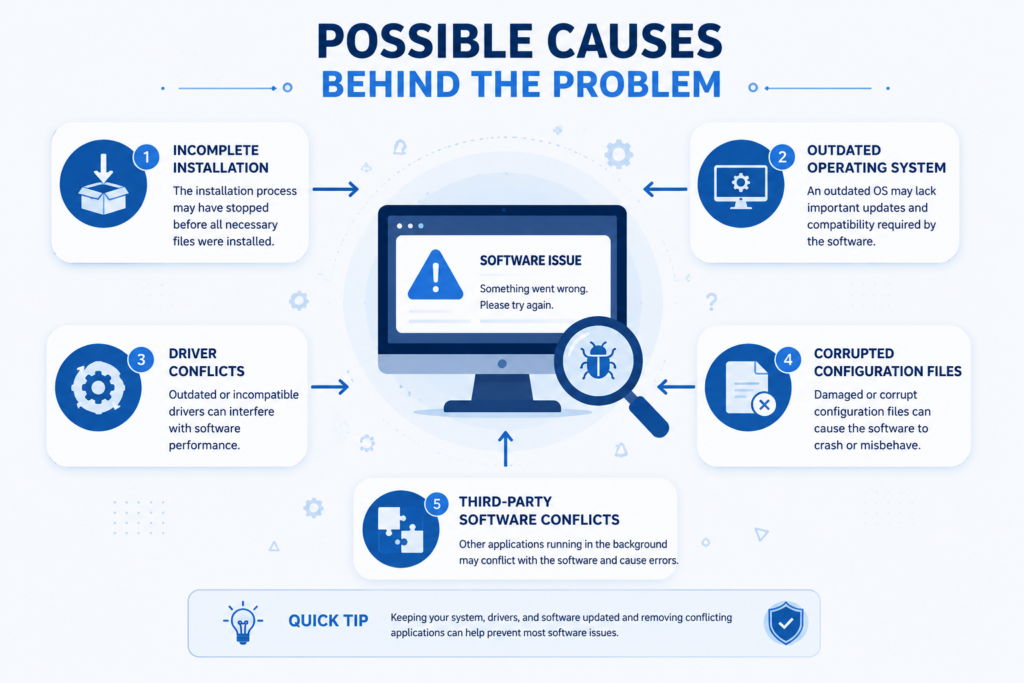
Possible Causes Behind the Problem
Several technical factors may contribute to software-related issues. Identifying the most likely cause can significantly reduce troubleshooting time.
Incomplete Installation
If the installation process is interrupted, important files may be missing or corrupted, causing the software to behave unexpectedly.
Outdated Operating System
Older operating system versions may lack updates required for newer software releases, leading to compatibility problems.
Driver Conflicts
Graphics, network, or chipset drivers that are outdated can interfere with software performance, especially applications that rely heavily on hardware resources.
Corrupted Configuration Files
Configuration files store application settings. If these files become damaged, the software may fail to launch correctly or repeatedly crash.
Third-Party Software Conflicts
Security software, optimization tools, or background applications sometimes interfere with normal program execution, resulting in unexpected errors.
Effective Troubleshooting Steps
Most software problems can be resolved through a structured troubleshooting process rather than random trial and error.
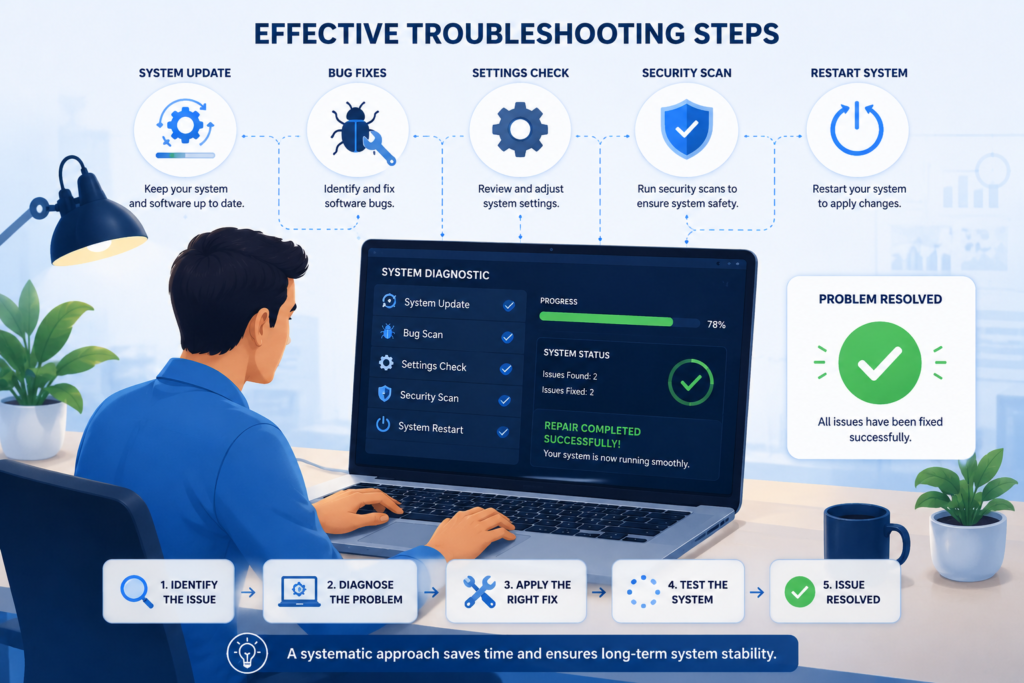
Restart the System
A simple restart clears temporary processes and releases system resources that may be affecting the application.
Verify System Requirements
Ensure your computer meets the minimum hardware and software requirements needed for the application to run properly.
Install Available Updates
Keeping both the operating system and the software updated helps eliminate known bugs and improves compatibility.
Reinstall the Software
A clean reinstallation replaces missing or corrupted files and restores the application’s default configuration.
Check Available Storage
Insufficient storage space can affect software performance, updates, and temporary file creation.
Disable Conflicting Programs
Temporarily closing unnecessary background applications may help determine whether another program is causing the issue.
Preventing Similar Problems in the Future
Although not every issue can be avoided, following good maintenance practices reduces the likelihood of recurring software problems.
Recommended habits include:
- Install updates regularly.
- Create restore points before major software changes.
- Download software only from trusted sources.
- Maintain sufficient free disk space.
- Keep hardware drivers updated.
- Scan the system periodically for file corruption or malware.
These preventive measures improve overall system reliability and reduce unexpected interruptions.
When Professional Assistance May Be Necessary
Some software issues persist despite basic troubleshooting. If repeated crashes, data corruption, or installation failures continue, professional technical assistance may be required.
Users should document error messages, note when the issue occurs, and record any recent system changes. Providing accurate information makes it easier for technical support teams to identify the underlying cause and recommend an appropriate solution.
Avoid making unnecessary changes to system files without understanding their purpose, as this can create additional complications.
Best Practices for Maintaining Software Stability
Long-term software performance depends on consistent maintenance rather than occasional fixes.
Useful practices include:
- Remove applications that are no longer needed.
- Keep startup programs to a minimum.
- Regularly restart the computer.
- Monitor system performance.
- Back up important files before significant updates.
- Review application settings after major software upgrades.
Small maintenance habits can significantly improve software stability over time.
Conclusion
The software ralbel28.2.5 issue may arise from various factors, including installation problems, compatibility conflicts, outdated components, or corrupted system files. While the exact cause differs from one system to another, a systematic troubleshooting approach often resolves the problem without requiring advanced technical expertise. By keeping software updated, maintaining a healthy operating system, and following preventive maintenance practices, users can reduce the risk of future issues and enjoy a more stable computing experience.